
Cards and board games Game guide
Tidal Claim: why the first lighthouse jump backfires
The opening lighthouse is within reach, but Navigator can take it straight back. Compare a jump with a clone, then use Undo to replay the choice in Tidal Claim.
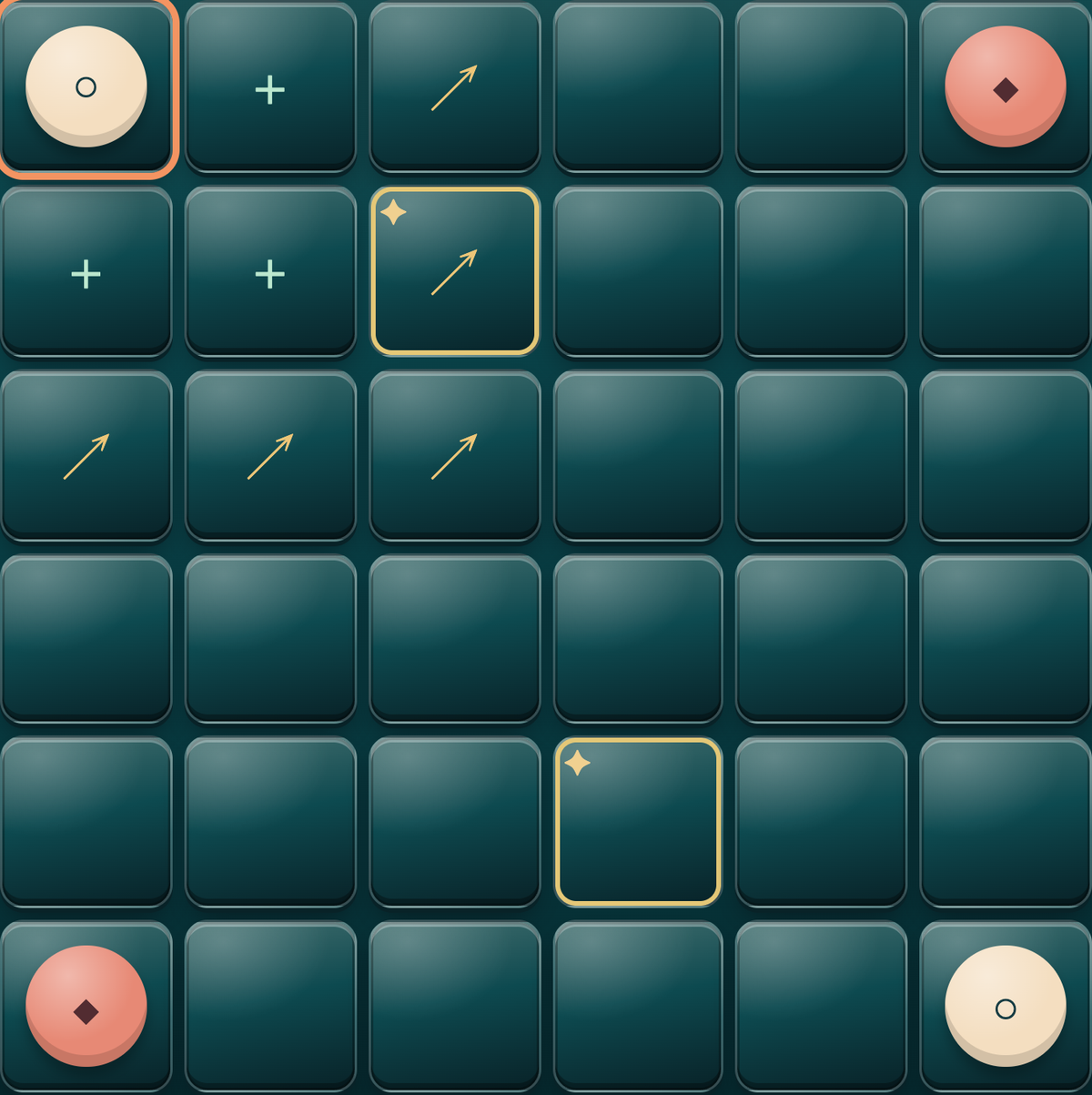
In Tidal Claim, a lighthouse is worth three points only while you hold it. Jump straight from the top-left pearl to the nearby gold tile on Open lagoon against Navigator, and the rival takes it on the very next move. You end the exchange with one point to Coral’s five.
The trap is easy to miss because the destination is marked as legal. That marker tells you where you can land, not whether your piece will survive the reply.
Check the landing square, not just the lighthouse
You control the cream pearl circles. Coral’s pieces have diamond centres. Click or tap one of your pearls, then a marked empty tile:
- A + move clones to a neighbouring square, including diagonally. Your original piece stays put.
- An arrow move jumps two squares away and empties the starting square. It moves a piece rather than adding one.
- Either landing converts every rival piece immediately beside it, including diagonals.
A lighthouse changes the score, not the conversion rule. A piece on gold can still change sides. Each occupied gold tile contributes three points total, rather than the one point an ordinary piece contributes.
Try the opening jump and watch the reply
Choose 01 Open lagoon from Challenges, with Navigator in the Rival selector. Choosing a rival starts the board again. Count rows from the top and columns from the left; the board is six by six.
- Select the pearl in row 1, column 1, at the top left.
- Jump to the gold lighthouse in row 2, column 3.
- Wait for Coral’s reply before judging the move.
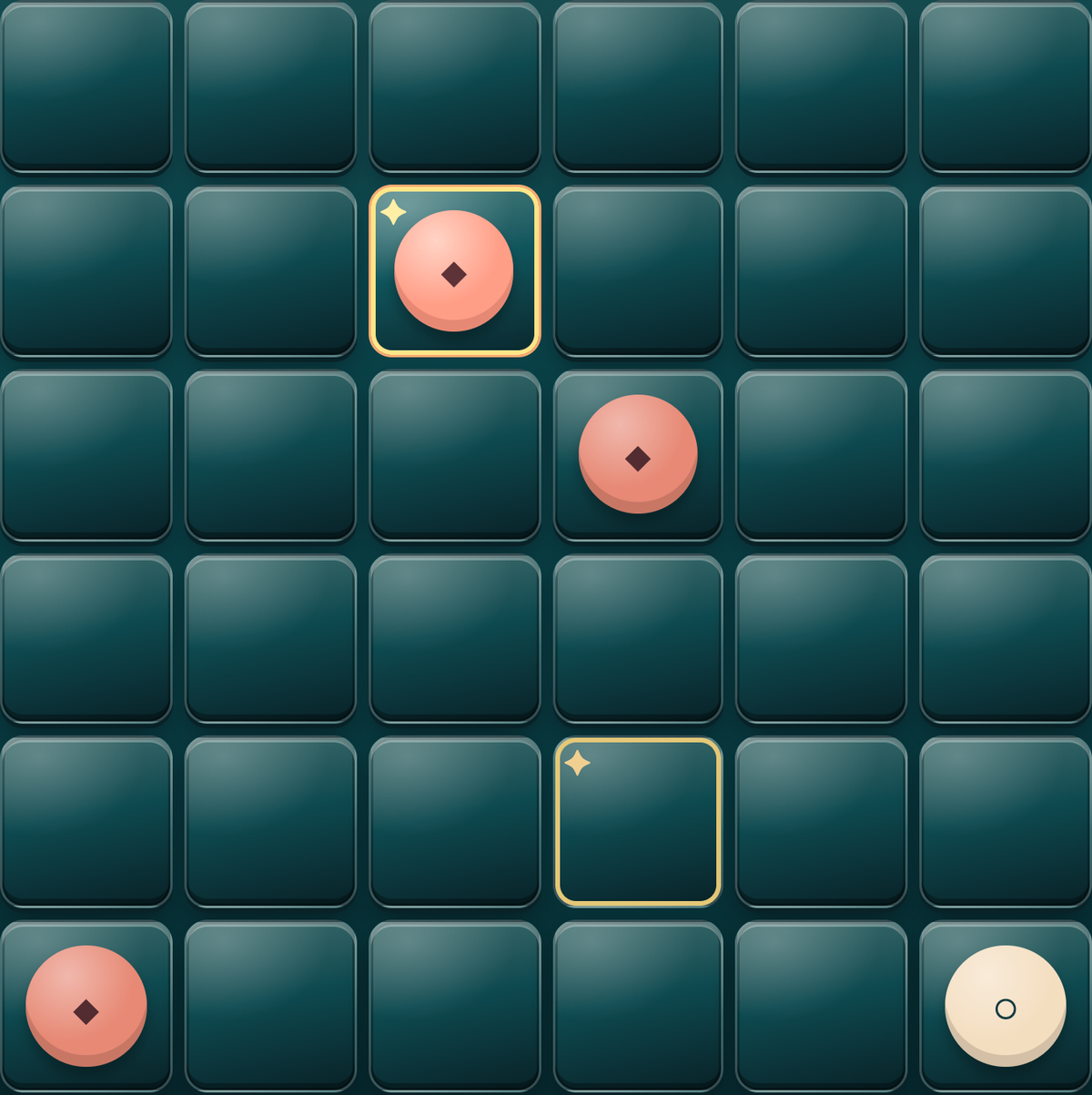
Navigator jumps from the top-right corner to row 3, column 4. That landing is diagonally beside your lighthouse, so your pearl turns coral. Your starting corner is already empty because you jumped. The only pearl left is at the bottom right.
The counter now reads Pearl 1 : 5 Coral · 2/100. Coral has three pieces, but one occupies a lighthouse: three points there, plus one each for its other two pieces. The turn counter includes both your move and the rival’s reply.
Undo the exchange and try a clone
Press Undo once. It takes back your move and the rival’s reply together, returning this example to 2 : 2 and 0/100. You don’t need to undo each side separately.
Select the top-left pearl again, then choose row 2, column 2, the diagonal + square. This time the corner stays occupied. Navigator clones from its top-right corner to row 2, column 5, leaving the score at 3 : 3 after two turns.
That clone avoids this particular opening loss; it isn’t a promise of a winning game. Before reaching for gold on your next turn, look for an empty square beside the destination that Coral can reach. If there is one, count what the reply would convert before committing your piece.