
Sports & skill Game guide
Better mini-golf shots start with where the ball should stop
A practical Fern Fairway guide to pull-back aiming, power, rebounds and learning from a missed putt without changing everything at once.
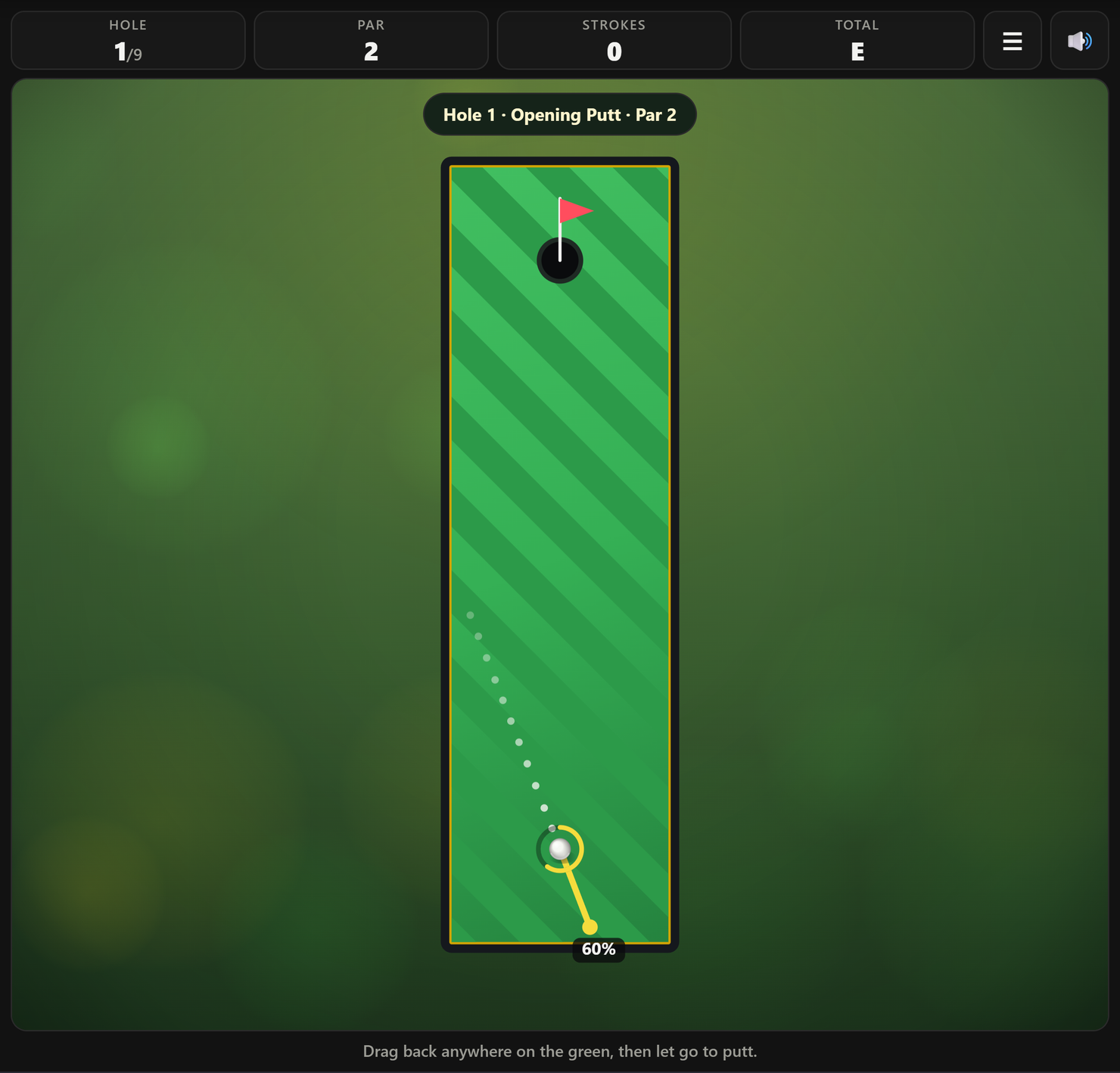
A putt can head straight for the flag and still miss. If the ball reaches the cup too fast, it may roll past and leave you a harder second shot.
In Fern Fairway, choose where you want the ball to stop before you pull back. When a wall blocks the cup, that might be an open patch beyond the corner rather than the hole itself.
Here’s how the controls work in our browser game, and how to adjust your next shot after a miss.
Get comfortable with the pull-back control
Choose Meadow Nine to begin. On the green, press and drag, then release to putt. The launch direction is opposite the pull: pulling down sends the ball upward; pulling to the right aims left. The dotted guide is the direction to watch. Your pointer does not have to move toward the destination.
The length of the pull controls power. A longer drag increases the shot strength, up to its limit. A short, deliberate drag is easier to read than a quick swipe. While holding, look at the power indicator and guide before releasing. On a phone, use a clear patch of the green so your finger does not cover the information you need.
You can drag from elsewhere on the green rather than starting precisely on the ball. That matters near an edge: a ball close to the bottom of the screen should not force you to pull your pointer outside the playable area. The game translates the gesture into a shot from the ball’s actual position.
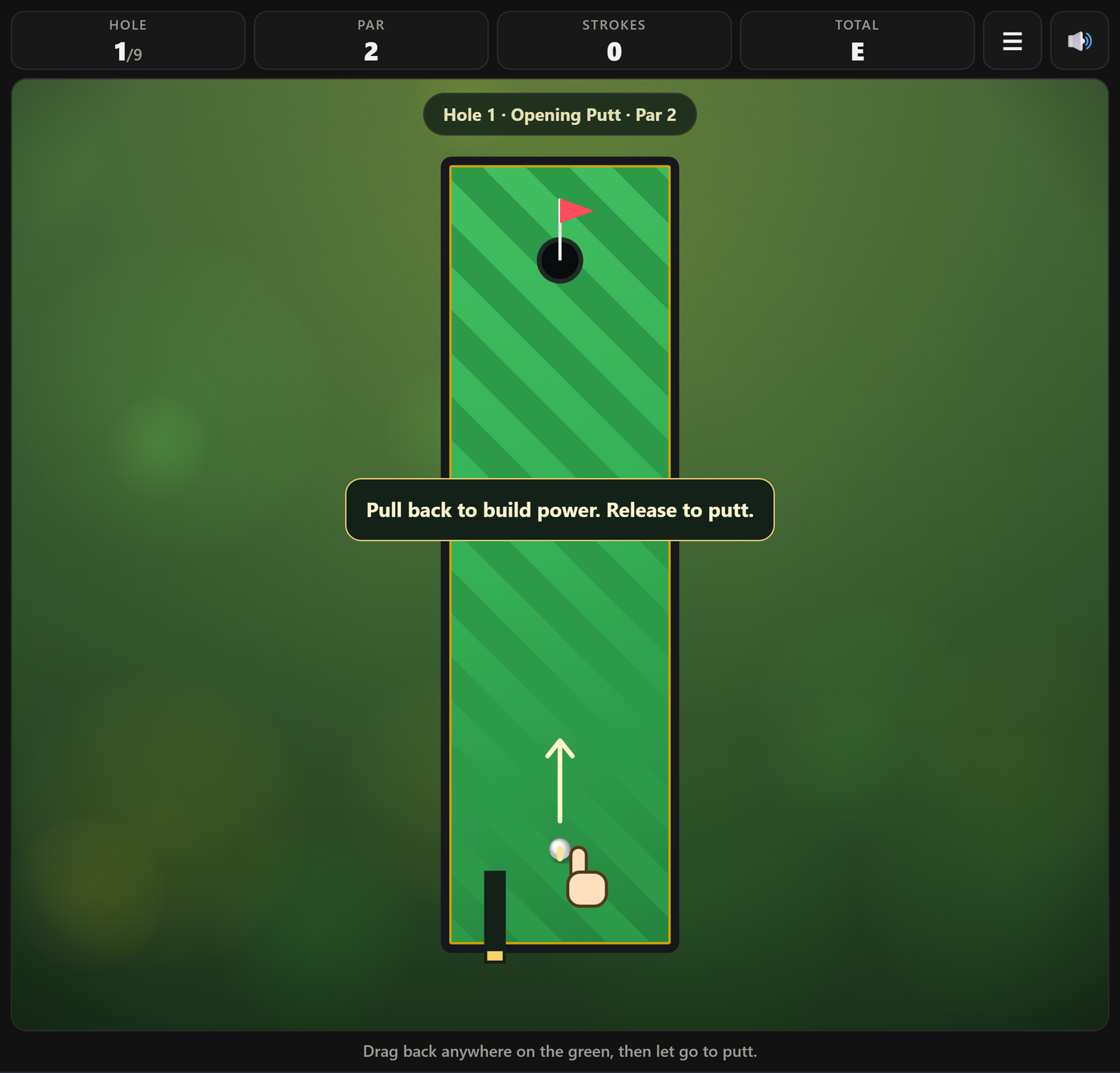
Follow the opening tutorial for your first shot and watch how the arrow responds to your drag.
Read the hole before choosing the target
Look for a clear line from the ball to the cup. If a wall blocks it, find an open area you could reach first, with room for the ball to slow down.
Opening Putt is a narrow lane. It makes direction easy to see, and the side walls make a rebound visible. The next hole, Dogleg, asks a different question. The shape of the green is now part of the route; sending the ball harder along the wrong line does not remove the corner.
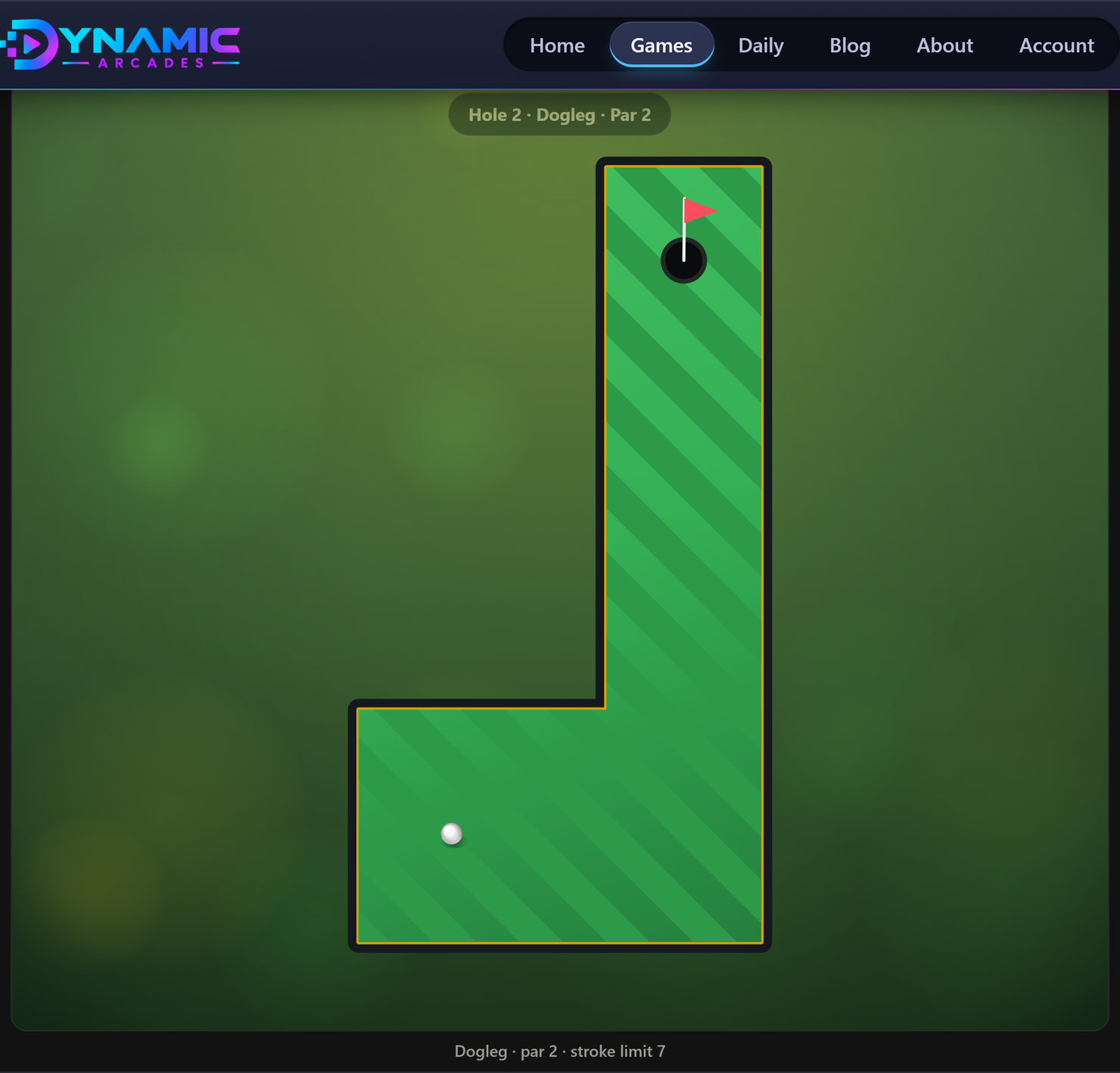
On a bent course, try setting up a second shot from an open patch beyond the corner. A two-shot route you can repeat may save strokes over repeated attempts at a difficult hole-in-one.
Change power without changing the whole experiment
After a miss, ask what actually failed. Did the ball pass left or right of the target? That suggests an aim problem. Did it follow a useful line but stop early or run too far? Start with power. Changing both dramatically at once makes the next result harder to interpret.
For a repeatable adjustment, hold approximately the same direction and make the next pull a little shorter or longer. Watch the readout. “A little less than last time” becomes more meaningful when you can see roughly how much less. There is no universal percentage for a hole: your current position, chosen route and collisions all matter.
Our pictured 60% shot used a wall and reached the cup on Opening Putt. That setting worked from this position along this route. Adjust it when the ball, target or route changes.
When the ball stops, pause before acting. Its new position changes the geometry. A tiny follow-up should be aimed from where the ball is now, not from the tee you remember.
Use a rebound as a route, not a rescue plan
For a bank shot, pick the section of wall you want to hit, then look at where the rebound should take the ball.
Start with a broad, forgiving wall rather than a small corner. A slight change in contact near a corner can send the ball somewhere quite different. Leave room around obstacles instead of drawing a perfect theoretical line that barely clears an edge.
The dotted guide helps with the initial direction. It is not a promise that every later bounce will follow an ideal diagram. Fern Fairway simulates motion, collisions and slowing; the observed path matters more than a sketch in your head. After a rebound, notice whether the ball still has useful speed and where it comes to rest.
A bank shot also spends travel distance. If your direct shot already stops short, adding a long rebound route may require more power. Conversely, adding power to a short bank can create several extra contacts you never planned. Work up from a controlled attempt and let the result tell you what changed.
Treat the cup as a finishing zone
Merely crossing the cup’s position is not the whole task. The game’s capture behaviour considers the ball’s speed near the hole. A fast approach can produce a lip or overshoot instead of a finish. That is why a shot that looks accurate can still leave another stroke.
For a short putt, give yourself permission to make a small movement. On a large screen, a modest pointer motion can look underpowered compared with the length of the course. The ball only needs to cover the remaining distance. Do not replay the power of your tee shot automatically.
Once the ball is holed, wait for the result and press Next. Use the scorecard to pick a hole to practise on your next round.
A practice session that teaches you something
Try one Meadow Nine round with a specific goal: before releasing each shot, say where you expect the ball to stop. Afterwards, compare the result with that prediction. This keeps your attention on a skill you can improve even when the score is untidy.
On a later round, pick just one difficult hole to study. Keep a similar route and vary power carefully. If the route repeatedly leaves an awkward follow-up, change the target position rather than repeating the same idea harder. You are learning which errors are small enough to recover from.
You can also try a rebound just to see what happens. Save the careful comparisons for shots you want to repeat.
For planning without a moving ball, try Pebble Furrow’s path puzzles. Or play another Fern Fairway round and see whether you can leave yourself shorter follow-up putts.
Checked against Fern Fairway v4 on 23 September 2026. We held and released the pictured shot through normal mouse input, observed the cup result, and advanced to Dogleg. The explanations also follow the shipped movement and cup rules; this is not an exhaustive route guide or a physical-phone test.