
Cards & board games Game guide
Tallow Solitaire: when to keep, burn and relight
Learn how Tallow Solitaire’s three-card draft, one-card hand and eight-drop candle work, with a real board example and a before-and-after relight.
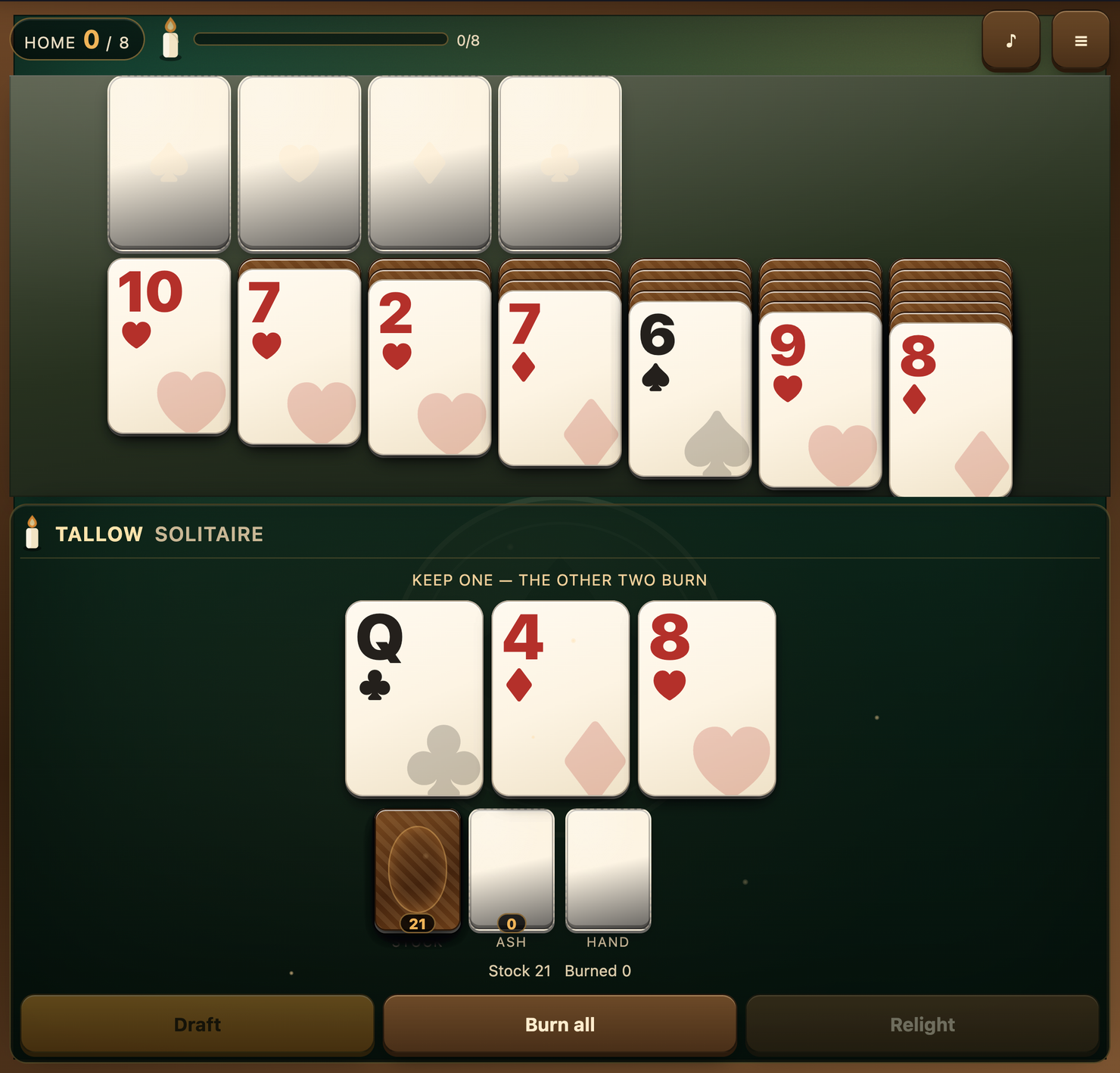
Before keeping a card in Tallow Solitaire, find where you’ll put it. Your hand holds only one card, and you can’t draft again until that hand is empty. Picking a card just because it looks useful can leave you burning it a moment later.
The goal is eight cards home, meaning eight cards sent to the suit piles above the columns. You’re not trying to save the whole deck. Drafting burns cards, and relighting only brings some of them back.
Find a landing before you draft
The seven columns build down by one rank in alternating colours. A black six can go on a red seven; a red six cannot. An empty column takes a king. The four foundation piles build up within each suit, starting with its ace.
Click a face-up card, then its destination. A legal face-up run can move together, and uncovering a face-down card turns it over. Look for these moves before pressing Draft: a newly exposed card may give your next pick somewhere to go. You can also select a card and click the appropriate foundation to send it home.
Draft turns up three stock cards, or however many remain if there are fewer than three. Choose one and the others go to the ash pile. Each burned card adds one drop of wax to the candle.
Read the three cards against the board
The screenshot above shows a queen of clubs, a four of diamonds and an eight of hearts. At that moment:
- The black queen needs a red king at the bottom of a column. Neither red king is exposed.
- The red four needs a black five. There isn’t one exposed either.
- The red eight needs a black nine. The visible nine is a heart, so it won’t take another red card.
The foundations are empty, so none of those cards can go home yet. That doesn’t prove the whole deal is stuck: moving cards already on the board can reveal something useful. It does mean none of these draft cards has an immediate landing as shown.
In this check, choosing the queen put it in the hand slot, burned the other two cards and raised the wax count to two. Draft then became unavailable. Burning the held queen cleared the hand and added the third drop. This demonstrates the cost of taking a card without a destination, not a recommended opening.
If you decide not to keep any of the offered cards, Burn all clears the draft directly. With three cards on offer, that gives three drops and leaves the hand empty. You don’t have to select a card just to throw it away.
Relight returns fewer cards than you burned
Relight becomes available when you have at least eight drops of wax and cards in the ash pile. It costs eight drops, shuffles the ashes and returns some to the stock. The flame permanently consumes a quarter of that ash pile, rounded up to a whole card.
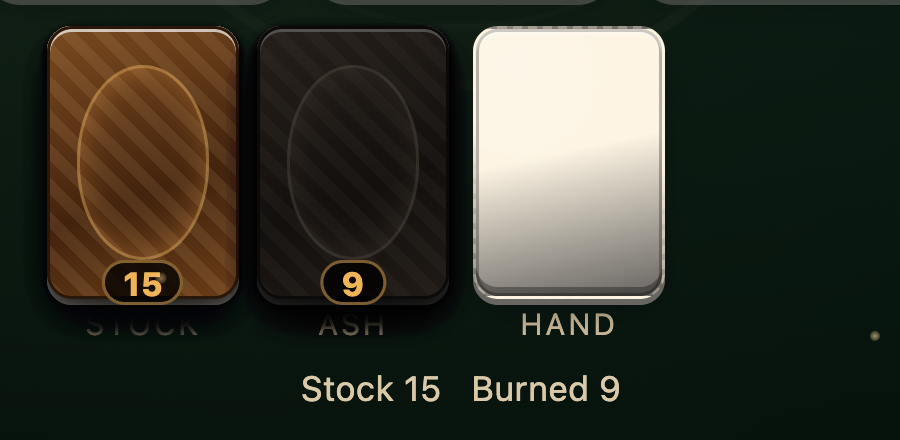
Here is the same deal after the first three stock drafts were burned. The stock has fallen to 15, the ash pile holds nine cards, and the candle says Ready +1: enough for a relight with one drop left over.
Pressing Relight returned six of those nine cards. The stock rose from 15 to 21, the ash pile emptied, and the candle fell to 1/8. Three cards were consumed permanently. The Burned 9 text stayed at nine because it counts burning events, not the number currently in the ash pile.
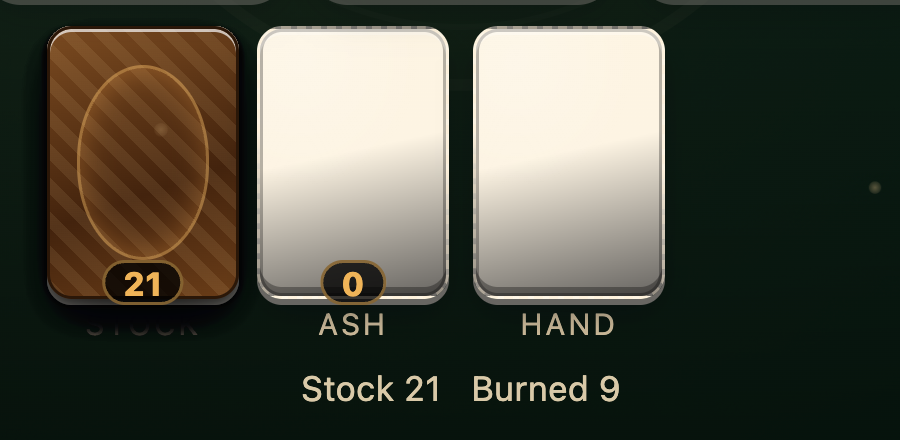
You don’t need to empty the stock before relighting, but the button is not a free reset. Don’t count on a particular burned card coming back: some of the shuffled ashes are lost, and every relight leaves fewer cards in the deal.
Aim for eight home, then keep playing
Reaching eight cards home meets the mark; it doesn’t immediately stop the deal. Keep looking for foundation moves and useful column moves. The deal ends once the stock is exhausted and there is no draft, held card, available relight or productive board move left. The result judges your home count against eight.
For your next deal, try one habit: before choosing a draft card, name its destination. If there isn’t one, look for a column move that opens space before deciding what to burn.
Checked against Tallow Solitaire v2 on 29 September 2026 in desktop Chrome. The screenshots come from one deal; yours will have different cards. They demonstrate the controls and resource changes, not a guaranteed winning line.